


Daily Sketching Habits: How Consistent Practice Transforms Your Drawing Skills
- Dec 13, 2025
- 8 min read
Updated: Dec 20, 2025
by Rima Z
If there’s one habit that has genuinely transformed my drawing skills over the years, it’s daily sketching.
Not expensive materials, not expensive courses, not waiting for inspiration to strike.
Just showing up every day with a sketchbook (any sketchbook will do, it doesn't need to be fancy) and making marks.
Whether you’re completely new to sketching or someone who already draws but feels “stuck”, building a consistent sketching habit can quietly, but powerfully, change how you see, how you draw, and how confident you feel as an artist.
In this article, I’ll walk you through what sketching really is, how it differs from drawing and painting, why daily sketching works, why building a sketching habit is more sustainable if done in a like-minded community, how to improve your sketching skills faster, and explore the many sketching niches you can try; such as urban sketching, travel sketching, gesture sketching, and more.
Everything here comes from years of sketching daily, making mistakes, experimenting, meeting different communities and people, and learning the slow but rewarding way.

What is sketching?
At its core, sketching is the act of visually thinking on paper.
Sketching is not about perfection. It’s not about polished results or finished artwork. Instead, it’s about:
Capturing ideas quickly
Observing shapes, forms, and proportions
Exploring composition and movement
Practising without pressure
A sketch is often loose, incomplete, and exploratory. It’s allowed to be messy. In fact, it should be messy!
When you sketch, you’re training your eye and hand to work together. You’re learning how to see, not just objects, but relationships between shapes, light, space, and movement.
Sketching vs Drawing vs Painting: What’s the difference?
This is a common question, especially for beginners, so let’s break it down in a simple explanation.
Sketching
Fast and informal
Focused on exploration and practice
Often done with pencil, pen, charcoal, or digital tools (although there are artists who sketch with watercolour or mixed media)
Prioritises ideas over finish
Sketching is usually process-driven, not result-driven.
Drawing
More refined than sketching
Focuses on accuracy, detail, and structure
Can be finished or presentation-ready
Often monochrome but not always
Drawing often starts with sketching and then develops further.
Painting
Focuses on colour, light, and mood
Typically slower and more deliberate
Uses paint (watercolour, acrylic, oil, digital)
Often intended as a final artwork
Many paintings begin as sketches. Sketching is the foundation that supports both drawing and painting.
Why daily sketching is so powerful
Daily sketching works not because it’s dramatic, but because it’s consistent.
Here’s what happens when you sketch every day, even for just 10–20 minutes:
1. You improve faster than you expect
Short, frequent practice beats long, irregular sessions every time. Your brain retains information better when it’s reinforced daily.
2. You remove fear and perfectionism
When sketching becomes routine, the fear of “ruining the page” disappears. You stop judging and start experimenting.
3. Your observation skills sharpen
Daily sketching trains you to notice details, angles, proportions, and negative space that you once overlooked.
4. Your confidence grows naturally
Confidence doesn’t come from talent; it comes from repetition. When sketching is part of your day, improvement feels inevitable rather than intimidating.
How long should a daily sketching session be?
This is important: daily sketching does not mean hours of work.
In fact, I’d recommend:
5–10 minutes for busy days
15–30 minutes for steady progress
Consistency matters far more than duration. A small sketch every day builds momentum and keeps your skills alive.
How to improve your sketching skills (practical tips that work)
Let’s talk about improvement, the part everyone cares about (myself included!).
1. Sketch from life as often as possible
Photos are useful, but sketching from real life teaches depth, proportion, and perspective far more effectively.
Try sketching:
Your morning coffee mug
People on public transport
Buildings across the street
Your own hands
2. Focus on shapes, not details
One of the biggest beginner mistakes is jumping into details too soon.
Instead:
Break objects into simple shapes
Lightly block in proportions
Add details only at the end
3. Use timed sketches
Set a timer for 1-2 minutes, or 5 to 15 minutes; this forces you to focus on essentials and improves speed and confidence.
4. Sketch imperfectly on purpose
Not every sketch should be “good”. Some of my most valuable learning moments came from ugly sketches that taught me what not to do.
5. Keep everything in sketchbook(s)
Avoid tearing out pages, no matter how bad you think your sketches are! Your progress is easier to see and appreciate when everything stays together.
Exploring sketching niches (find the style that fits you)
Sketching isn’t one thing; it’s a wide, flexible practice with many exciting niches. Exploring them keeps daily sketching fresh and motivating.
1. Daily Observational Sketching
This is the foundation of everything. Daily sketching focuses on habit-building rather than subject matter. You sketch something every day, no matter how small. This involves careful observation of real objects, still life, or environments.
Best for: beginners, artists rebuilding confidence, and anyone wanting steady improvement.
You might sketch:
Plants
Household objects
Tools
Natural forms
Daily observational sketching also strengthens accuracy and patience.
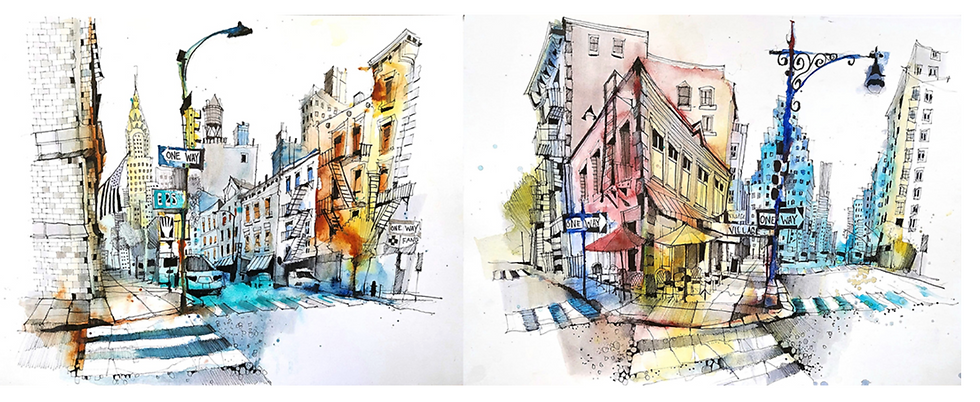
2. Urban Sketching
Urban sketching involves drawing on location in an urban setting, usually in towns or cities.
Subjects include:
Streets and buildings
Cafés and markets
People going about their day
Urban sketching improves:
Perspective
Observation
Speed and confidence
It’s also a social niche, there are urban sketching groups around the world.

3. Travel Sketching
Travel sketching is about documenting places through drawing rather than photos.
You might sketch:
Architecture
Landscapes
Food
Local cultures
Travel moments
Travel sketches don’t need to be perfect, they’re your personal visual diaries documenting your travel.


4. Gesture Sketching
Gesture sketching focuses on movement and flow, especially with people and animals.
Typically:
Very fast sketches
Loose lines
Minimal detail
This niche is excellent for improving:
Figure drawing
Energy and rhythm
Confidence in line work

5. Concept Sketching
Concept sketching is used by designers, illustrators, and creatives to explore ideas quickly.
It’s about:
Visual problem-solving
Rapid ideation
Communicating ideas
You don’t need to be a professional designer to benefit from this approach.


6. Nature and Botanical Sketching
This niche focuses on:
Plants
Trees
Flowers
Landscapes
It encourages slower observation and works beautifully with coloured pencil or watercolour.

7. Digital Sketching
Digital sketching uses tablets and software, offering flexibility and experimentation without materials.
It’s ideal if you:
Travel light
Like undo options
Work digitally already
The principles of sketching remain the same, regardless of tools.

Building a sustainable daily sketching habit
Here’s what has helped me stick with daily sketching long-term, hopefully, this will help you too.
Make it obvious
Keep your sketchbook and pen somewhere visible, on your desk, bedside table, or bag (I always carry them in my bag).
Make it easy
Don’t overcomplicate materials. One pen (or a pencil) and one sketchbook are enough.
Make it enjoyable
Sketch subjects you like. Improvement follows enjoyment, not the other way around.
Lower the bar
On tough days, one small sketch still counts.
Why being in a community makes my daily sketching habits stick
One thing I’ve learned from years of sketching daily is this: sketching is easier and far more sustainable when you’re not doing it alone.
While sketching often feels like a solitary activity, building a healthy, long-term sketching habit becomes significantly easier with the support of a like-minded community. This doesn’t mean constant critique or comparison. Instead, it’s about shared encouragement, accountability, and inspiration.
The motivation boost of sketching with others
When you’re part of a sketching community, online or in person, you’re gently reminded that:
Everyone struggles with consistency at times
Imperfect sketches are completely normal
Progress looks different for everyone
Seeing others show up daily, even with quick or rough sketches, reinforces the idea that showing up matters more than producing perfect work.
On days when motivation is low, a simple scroll through other people’s sketches can be enough to pick up your pencil and draw for five minutes. And often, that’s all you need.
Accountability without pressure
One of the most powerful benefits of community is soft accountability.
Knowing that:
You’re participating in a regular sketch challenge
You post your sketches regularly
Others are expecting to see your work
This environment creates a gentle nudge to keep going, without the pressure of deadlines or judgment.
In my experience, this kind of accountability feels supportive rather than stressful. You’re not sketching for others, but alongside them.
Learning through shared experience
Sketching communities are also an incredible learning resource.
You’ll often pick up:
New sketching techniques
Fresh subject ideas
Different approaches to the same scene or objects
Tool and material recommendations
Sometimes, simply seeing how someone else sketches the same subject can unlock a breakthrough in your own practice.
Confidence grows faster in a supportive space
Sharing sketches, especially unfinished or messy ones, can feel intimidating at first. But over time, it builds confidence in a way private sketching alone often doesn’t.
You begin to realise:
Your sketches don’t need to be “good” to be valuable
Mistakes are part of the process
Progress happens quietly, page by page
A good sketching community celebrates effort, not just results.
Where to find sketching communities
Sketching communities exist in many forms, including:
Local urban sketching groups
Online sketch challenges
Social media hashtag communities
Forums and creative platforms
Small accountability groups with friends
What matters most isn’t the size of the community, but the shared mindset: regular practice, curiosity, and encouragement.
Sketching is a personal practice, but you don’t have to do it alone. Regular sketching is deeply personal. Your sketchbook is your space to explore, experiment, and grow at your own pace. But having a community alongside you can make the journey more enjoyable, more motivating, and far more sustainable.
From my own experience, some of my longest sketching streaks and biggest breakthroughs happened when I felt supported, seen, and encouraged by others who love sketching too.
If you’re struggling to stay consistent, don’t change your tools, try changing your supportive circle. Sometimes, all it takes is knowing you’re not sketching alone.
Common sketching myths (that hold people back)
Let’s clear these up:
“I’m not talented enough” – Skill is built, not born.
“My sketches look bad” – They’re supposed to :)
“I don’t have time” – Five minutes is enough.
“I need better tools” – You need consistency, not supplies.
Final thoughts: Why sketching is worth showing up for
Sketching has a quiet power. It doesn’t shout, it doesn’t demand perfection, it simply asks you to show up. Regular sketching has taught me patience, observation, and trust in the process. Over time, your hand loosens, your eye sharpens, and your confidence grows, almost without you noticing.
If you’re looking to improve your drawing skills, explore your creativity, or simply slow down and observe the world more closely, regular sketching is one of the most rewarding habits you can build. Pick up your sketchbook today. One page is enough. You’ll be surprised where it takes you.


Comments